Strengthening Organizational Resilience Through Dual Transformation: Building a Solid Operational Defense Line Rooted in Digital Trust and Sustainable Value
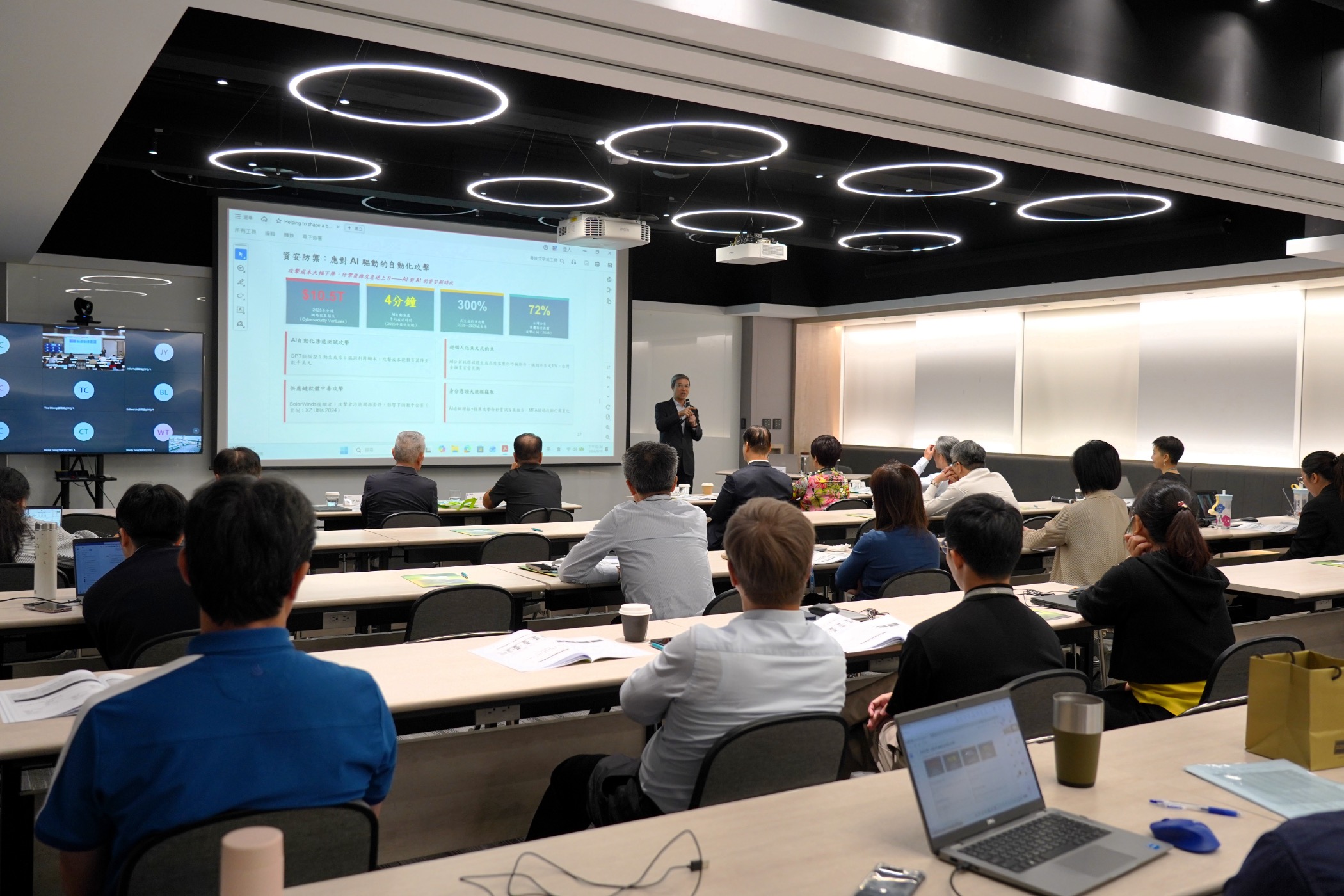
Facing multiple challenges such as geopolitical conflicts, supply chain restructuring, and extreme weather, operational resilience risks in the semiconductor component distribution industry have become increasingly complex and interconnected. Peter Pu, Strategic Advisor to the President of BSI (British Standards Institution), who has long specialized in sustainability governance, digital trust, global risk, and organizational resilience, and who brings extensive practical experience and incisive insights, pointed out in his lecture “Strengthening Organizational Resilience Through Dual Transformation: AI Governance and Sustainability Governance” that as companies pursue digital and net-zero transformation, “digital trust” and “sustainable value” are the two indispensable pillars for strengthening organizational resilience. The board should start with “Business Continuity Management (BCM),” combining the productivity gains enabled by AI with governance frameworks such as ISO/IEC 42001 and IFRS sustainability disclosures, to systematically address risks including supply chain disruptions, cybersecurity threats, regulatory compliance, and talent sustainability, and to build long-term, robust sustainable competitiveness.
Key Trends and Practical Insights
Core of the Dual Transformation: Distributors’ gross margins typically range from only 3.5% to 4.5%, and extreme weather, trade sanctions, and supply chain disruptions can directly erode profits, making the enhancement of operational continuity an important priority. At the same time, international ratings such as S&P Global, MSCI, and EcoVadis are increasingly becoming thresholds for supply chain cooperation; inadequate ESG performance may affect a company’s ability to secure orders, and the quality of information disclosure has shifted from image communication to a key condition affecting market access.
AI Implementation Methodology: When adopting AI, companies should not limit themselves to routine automation, but should focus on high-value applications such as improving customer relationships, decision-making quality, and productivity. Depending on function, companies can build multi-agent collaborative architectures (such as legal, finance, and warehousing Agents), coordinated and integrated by senior teams, and scale up progressively following the principle of “Think Big, Start Small, Scale Fast.” AI talent strategies should focus on “empowerment” rather than “headcount reduction” in order to reduce organizational resistance.
New Forms of Cybersecurity Risk: Risks arising from deepfake-generated voice and video fraud, as well as real-time social engineering, are rising, and real-world cases highlight the urgency of upgrading identity verification and critical transaction confirmation processes. Companies must also address the post-quantum cryptography threat of “Harvest Now, Decrypt Later,” taking stock of critical information assets and encryption mechanisms, implementing the “3-2-1-0” backup principle, and strengthening recovery capabilities in the face of major cybersecurity incidents.
Seven Core Principles of AI and Sustainability Governance: Transparency, fairness, accountability, security, privacy, inclusiveness, and low energy consumption. Adopting the ISO/IEC 42001 management system approach can also transform AI governance from fragmented controls into a systematic, traceable, and continuously improvable mechanism.
Implications for Board Governance and Practical Guidance
The board can strengthen oversight across five dimensions: establishing business continuity management, supply chain early-warning systems, and a geopolitical compliance matrix, and incorporating export controls into cross-border ERP and transaction review processes; formulating AI data access classification policies that prohibit sensitive information from being entered into public AI platforms, establishing review and accountability mechanisms for high-risk models, and implementing algorithmic accountability; building deepfake secondary identity verification and multi-factor authentication mechanisms, and advancing the inventory of critical assets and quantum-safe data architecture; aligning with ISO/IEC 42001 to establish rules for labeling, reviewing, and disclosing AI-generated content; and, from a financial and risk perspective, incorporating climate risk and IFRS sustainability disclosures into regular board oversight, prioritizing energy-saving and carbon-reduction projects with substantive investment returns, and strengthening long-term competitiveness and governance resilience.